

%2BAnnotation%2B(EN).png&w=3840&q=75)
Standard Delay Format (SDF) Annotation
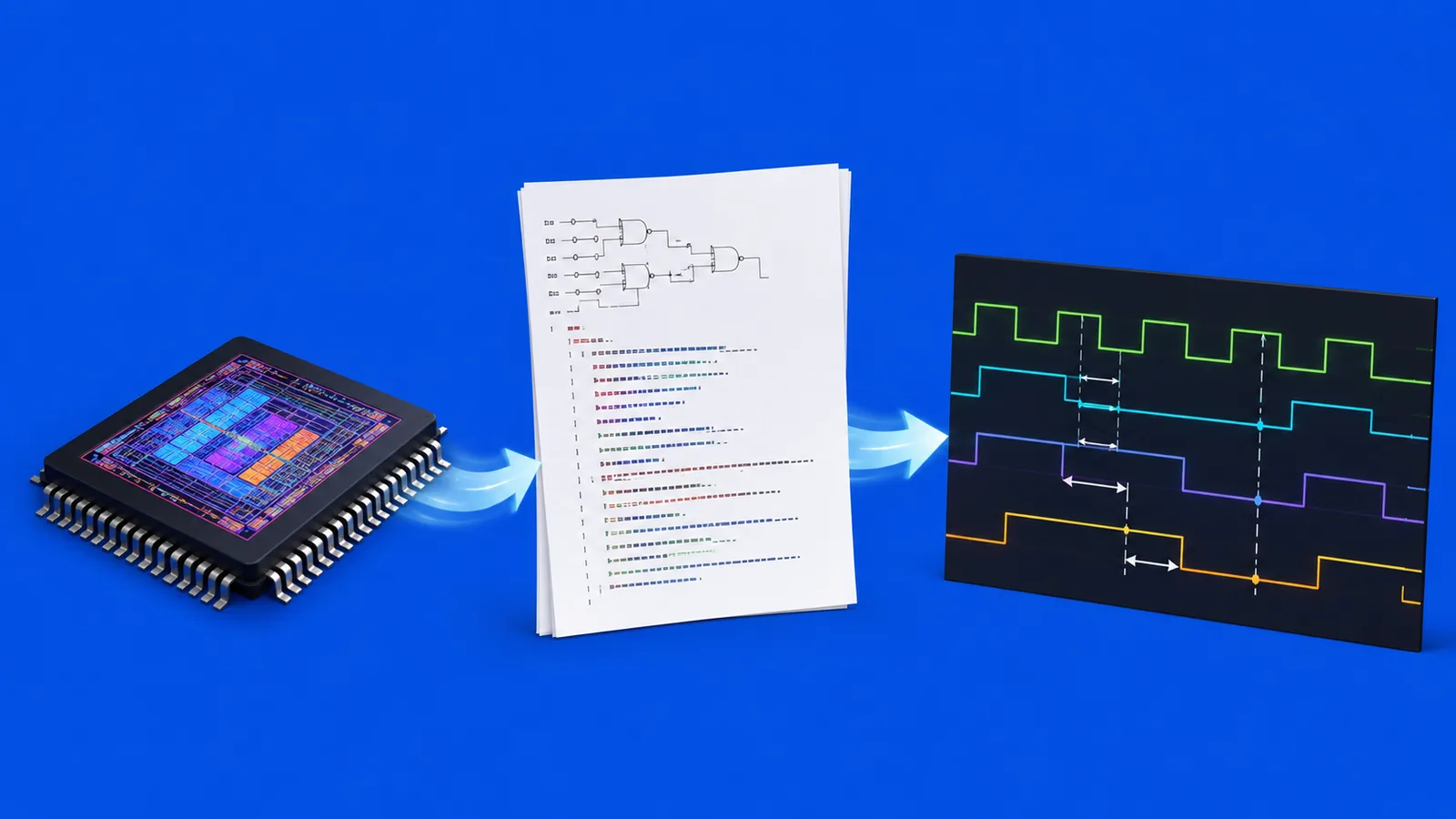
Standard Delay Format (SDF) annotation enables accurate timing-aware simulation by applying post-layout delays to Verilog and VHDL models. This involves parsing the hierarchical structure of SDF files, identifying key elements such as IOPATH, INTERCONNECT, and timing check keywords, and using the $sdf_annotate system task for efficient integration with HDL simulators. Emphasis is placed on understanding delay calculation methods, resolving annotation mismatches, interpreting tool-specific behavior, and adapting to language-specific modeling constraints. Proper application of SDF annotation ensures precise timing validation and supports design closure in complex digital systems.
This resource includes
resourceDescription
SDF annotation provides a standardized way to back-annotate timing information into HDL simulations, enabling verification of real-world performance after synthesis and layout. The SDF 4.0 specification, defined by IEEE 1497-2001, supports both VHDL and Verilog environments and captures detailed path delays, interconnect delays, and timing checks for each design element. Simulation accuracy is enhanced by mapping the delay data directly into the simulation model using well-defined syntax and hierarchical references. This approach ensures that critical timing behaviors such as setup, hold, recovery, and removal are properly reflected in the simulation, reducing the risk of late-stage functional-timing mismatches. Understanding the internal structure of an SDF file is essential to successful annotation. The file is organized into sections that describe the delay model, hierarchical instance paths, and keyword-based timing attributes. The header includes global metadata, such as the design name, timescale, and SDF version. Timing data is defined using keywords like IOPATH, INTERCONNECT, and TIMINGCHECK, which associate specific delays with cell paths, nets, and timing conditions. D...
This resource includes
resourceDescription
SDF annotation provides a standardized way to back-annotate timing information into HDL simulations, enabling verification of real-world performance after synthesis and layout. The SDF 4.0 specification, defined by IEEE 1497-2001, supports both VHDL and Verilog environments and captures detailed path delays, interconnect delays, and timing checks for each design element. Simulation accuracy is enhanced by mapping the delay data directly into the simulation model using well-defined syntax and hierarchical references. This approach ensures that critical timing behaviors such as setup, hold, recovery, and removal are properly reflected in the simulation, reducing the risk of late-stage functional-timing mismatches. Understanding the internal structure of an SDF file is essential to successful annotation. The file is organized into sections that describe the delay model, hierarchical instance paths, and keyword-based timing attributes. The header includes global metadata, such as the design name, timescale, and SDF version. Timing data is defined using keywords like IOPATH, INTERCONNECT, and TIMINGCHECK, which associate specific delays with cell paths, nets, and timing conditions. D...
Recommended

EDA Academy is a practical learning platform for engineers in the VLSI and semiconductor industry. We offer structured courses, technical resources, and career-focused training across all major areas of chip design and verification — from Verilog to Physical Design, from fundamentals to advanced topics. Learn at your own pace, explore member-exclusive content, or join as an instructor to share your expertise. Lear...
