

System-C Fundamentals
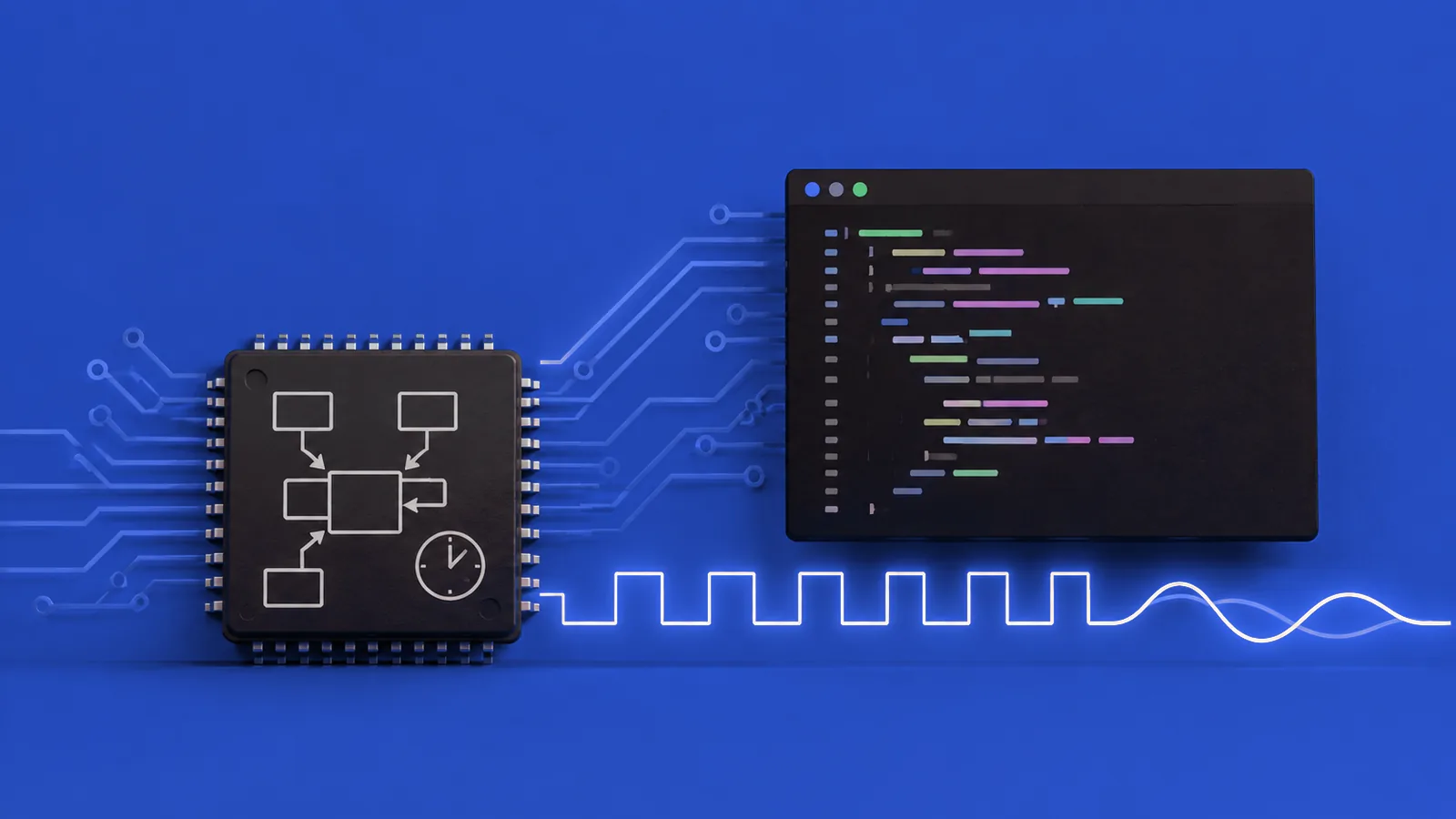
Build practical System-C foundations for hardware and software design through modules, ports, data types, processes, constructors, clocked threads, templates, and file structure. Create executable wrappers around C++ logic and model clock-driven behavior with clearer simulation and debugging discipline.
This resource includes
Description
System-C provides a C++-based foundation for modeling digital systems that include hardware behavior, software behavior, or both. It extends ordinary C++ with hardware-oriented concepts such as modules, ports, signals, processes, clocked execution, reset handling, and bit-accurate data representation. These features make it possible to wrap C++ logic in a System-C structure, execute it in a simulation environment, and describe behavior with the timing and concurrency expected in digital design. The technical foundation centers on System-C modules and interfaces. A module defines the boundary of a hardware block, while input and output ports define how data and control signals move across that boundary. Clock and reset input ports establish timing and initialization behavior. Data ports carry typed values into and out of the module. Port access through read() and write() keeps data movement explicit and separates interface behavior from internal computation. System-C data types are essential for hardware-accurate modeling. Bit-accurate integer types such as sc_int and sc_uint define signedness and exact width. Fixed-point types such as sc_fixed and sc_ufixed support integer and fr...
This resource includes
Description
System-C provides a C++-based foundation for modeling digital systems that include hardware behavior, software behavior, or both. It extends ordinary C++ with hardware-oriented concepts such as modules, ports, signals, processes, clocked execution, reset handling, and bit-accurate data representation. These features make it possible to wrap C++ logic in a System-C structure, execute it in a simulation environment, and describe behavior with the timing and concurrency expected in digital design. The technical foundation centers on System-C modules and interfaces. A module defines the boundary of a hardware block, while input and output ports define how data and control signals move across that boundary. Clock and reset input ports establish timing and initialization behavior. Data ports carry typed values into and out of the module. Port access through read() and write() keeps data movement explicit and separates interface behavior from internal computation. System-C data types are essential for hardware-accurate modeling. Bit-accurate integer types such as sc_int and sc_uint define signedness and exact width. Fixed-point types such as sc_fixed and sc_ufixed support integer and fr...
Recommended

EDA Academy is a practical learning platform for engineers in the VLSI and semiconductor industry. We offer structured courses, technical resources, and career-focused training across all major areas of chip design and verification — from Verilog to Physical Design, from fundamentals to advanced topics. Learn at your own pace, explore member-exclusive content, or join as an instructor to share your expertise. Lear...
