

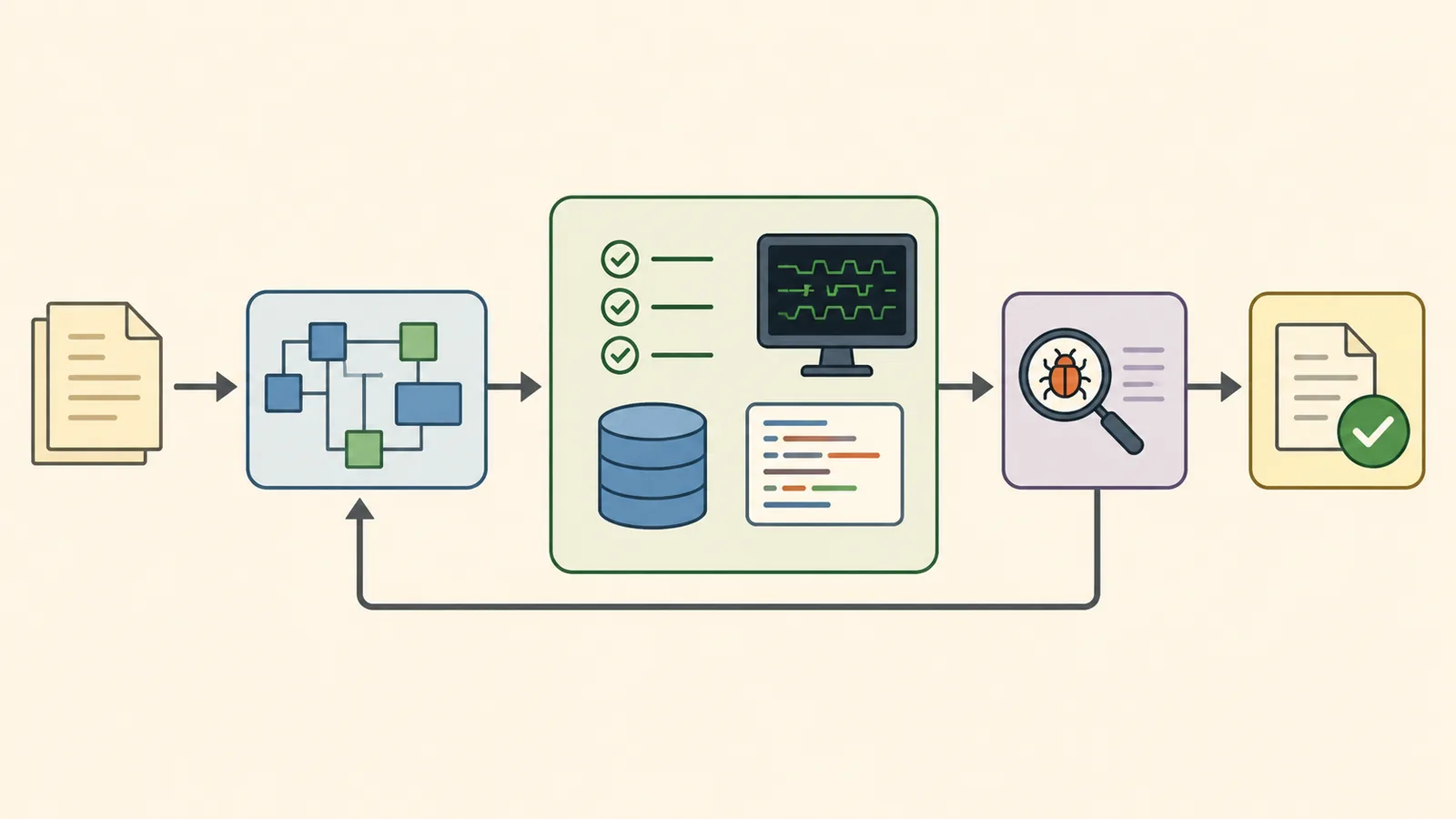

Measuring Functional Verification Quality and Completeness
Verification metrics turn functional verification into a measurable engineering process by connecting coverage, granularity, manual effort, effectiveness, completeness, reusability, constrained random stimulus, automatic checking, and MDV planning to evidence-based confidence in digital design behavior.
This resource includes
Description
Functional verification requires more than executing test cases and collecting pass or fail results. Reliable verification depends on measurable evidence that the design has been exercised, observed, checked, and evaluated across the intended functional space. Verification metrics provide that evidence by quantifying coverage, granularity, manual effort, effectiveness, completeness, and reusability. These measurements help clarify whether verification activity is producing real confidence or simply generating simulation volume. Granularity defines how deeply design behavior is observed and measured. A transaction-level view may confirm that high-level operations complete correctly, while detailed coverage at the interface, state, protocol, or signal level can expose corner cases that broader observation may miss. Manual effort measures the engineering cost required to create tests, inspect results, maintain infrastructure, and debug failures. Reducing manual effort through automation, reusable components, and structured checking improves scalability without weakening technical quality. Effectiveness and completeness determine whether a verification strategy is strong enough to ex...
This resource includes
Description
Functional verification requires more than executing test cases and collecting pass or fail results. Reliable verification depends on measurable evidence that the design has been exercised, observed, checked, and evaluated across the intended functional space. Verification metrics provide that evidence by quantifying coverage, granularity, manual effort, effectiveness, completeness, and reusability. These measurements help clarify whether verification activity is producing real confidence or simply generating simulation volume. Granularity defines how deeply design behavior is observed and measured. A transaction-level view may confirm that high-level operations complete correctly, while detailed coverage at the interface, state, protocol, or signal level can expose corner cases that broader observation may miss. Manual effort measures the engineering cost required to create tests, inspect results, maintain infrastructure, and debug failures. Reducing manual effort through automation, reusable components, and structured checking improves scalability without weakening technical quality. Effectiveness and completeness determine whether a verification strategy is strong enough to ex...
Recommended

EDA Academy is a practical learning platform for engineers in the VLSI and semiconductor industry. We offer structured courses, technical resources, and career-focused training across all major areas of chip design and verification — from Verilog to Physical Design, from fundamentals to advanced topics. Learn at your own pace, explore member-exclusive content, or join as an instructor to share your expertise. Lear...
