


Machine Learning Foundations, Requirements and Applications
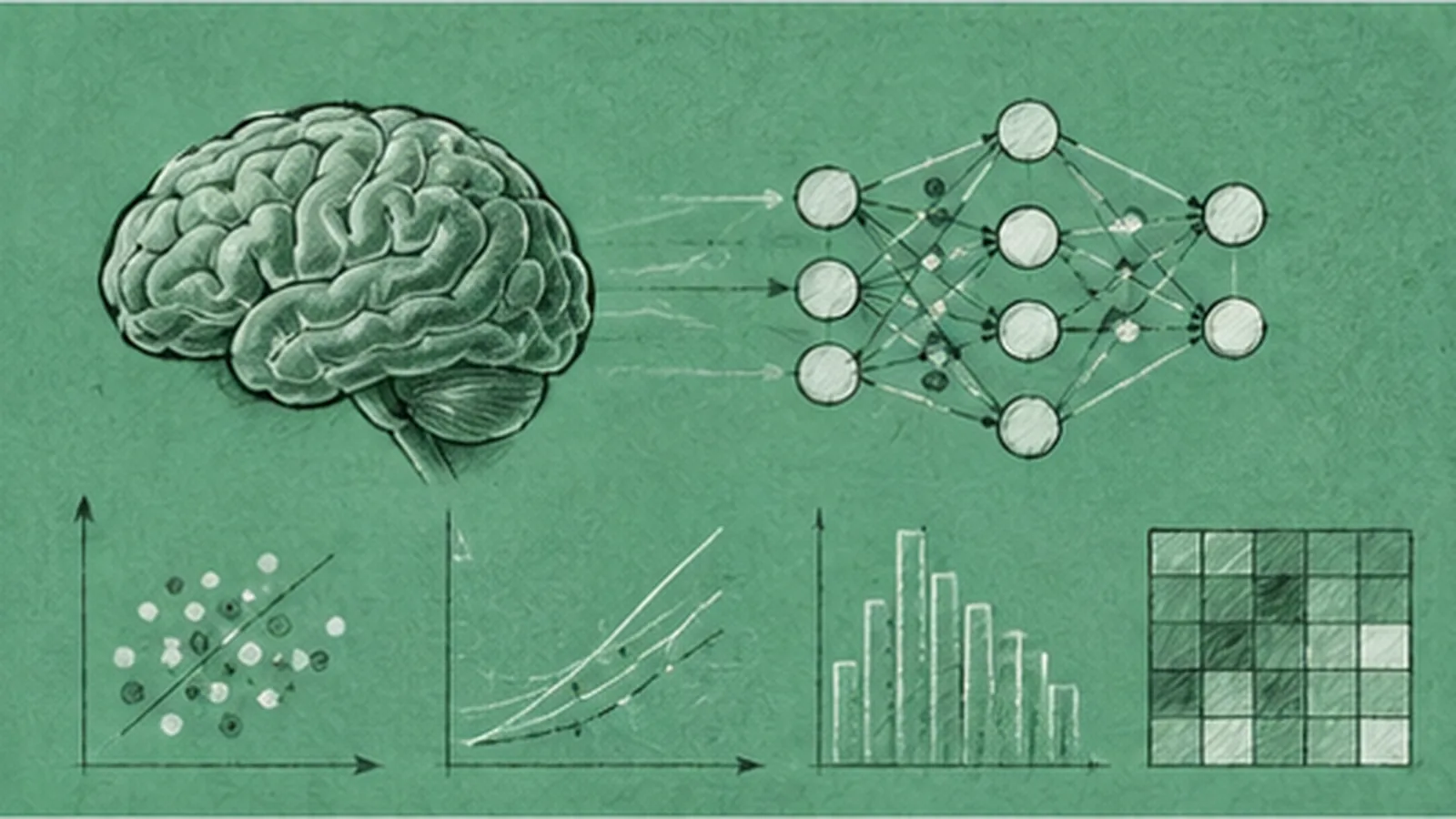
Explains how AI, machine learning, and deep learning relate, then connects machine learning deployment examples with practical requirements, including training data, techniques, programming languages, libraries, models, evaluation metrics, compute resources, and domain knowledge for real applications.
This resource includes
Description
Machine learning requirements connect AI concepts with practical implementation. Artificial intelligence, machine learning, and deep learning are defined as related but distinct ideas: AI describes the broad goal of machine intelligence, machine learning enables systems to learn from data, and deep learning uses neural networks to learn complex patterns. Practical deployment examples show how these ideas appear in self-driving cars, computer vision, disease detection and diagnosis, text and code generation, and chip manufacturing. Machine learning depends on several technical foundations. Training data teaches models to recognize patterns and predict outputs. Labeled datasets support natural language processing, speech recognition, image recognition, autonomous driving, fraud detection, recommendation systems, sentiment analysis, medical diagnosis, object detection, and customer service chatbots. Machine learning techniques define how models learn, including supervised learning, unsupervised learning, reinforcement learning, and deep learning. Each technique fits a different type of data, feedback, and prediction problem. The software stack includes programming languages, AI libr...
This resource includes
Description
Machine learning requirements connect AI concepts with practical implementation. Artificial intelligence, machine learning, and deep learning are defined as related but distinct ideas: AI describes the broad goal of machine intelligence, machine learning enables systems to learn from data, and deep learning uses neural networks to learn complex patterns. Practical deployment examples show how these ideas appear in self-driving cars, computer vision, disease detection and diagnosis, text and code generation, and chip manufacturing. Machine learning depends on several technical foundations. Training data teaches models to recognize patterns and predict outputs. Labeled datasets support natural language processing, speech recognition, image recognition, autonomous driving, fraud detection, recommendation systems, sentiment analysis, medical diagnosis, object detection, and customer service chatbots. Machine learning techniques define how models learn, including supervised learning, unsupervised learning, reinforcement learning, and deep learning. Each technique fits a different type of data, feedback, and prediction problem. The software stack includes programming languages, AI libr...
Recommended

EDA Academy is a practical learning platform for engineers in the VLSI and semiconductor industry. We offer structured courses, technical resources, and career-focused training across all major areas of chip design and verification — from Verilog to Physical Design, from fundamentals to advanced topics. Learn at your own pace, explore member-exclusive content, or join as an instructor to share your expertise. Lear...
