

Verilog Coding - FundamentalsFREE

Verilog Coding - Fundamentals

Start Designing Digital Circuits with Verilog: A Beginner’s Guide

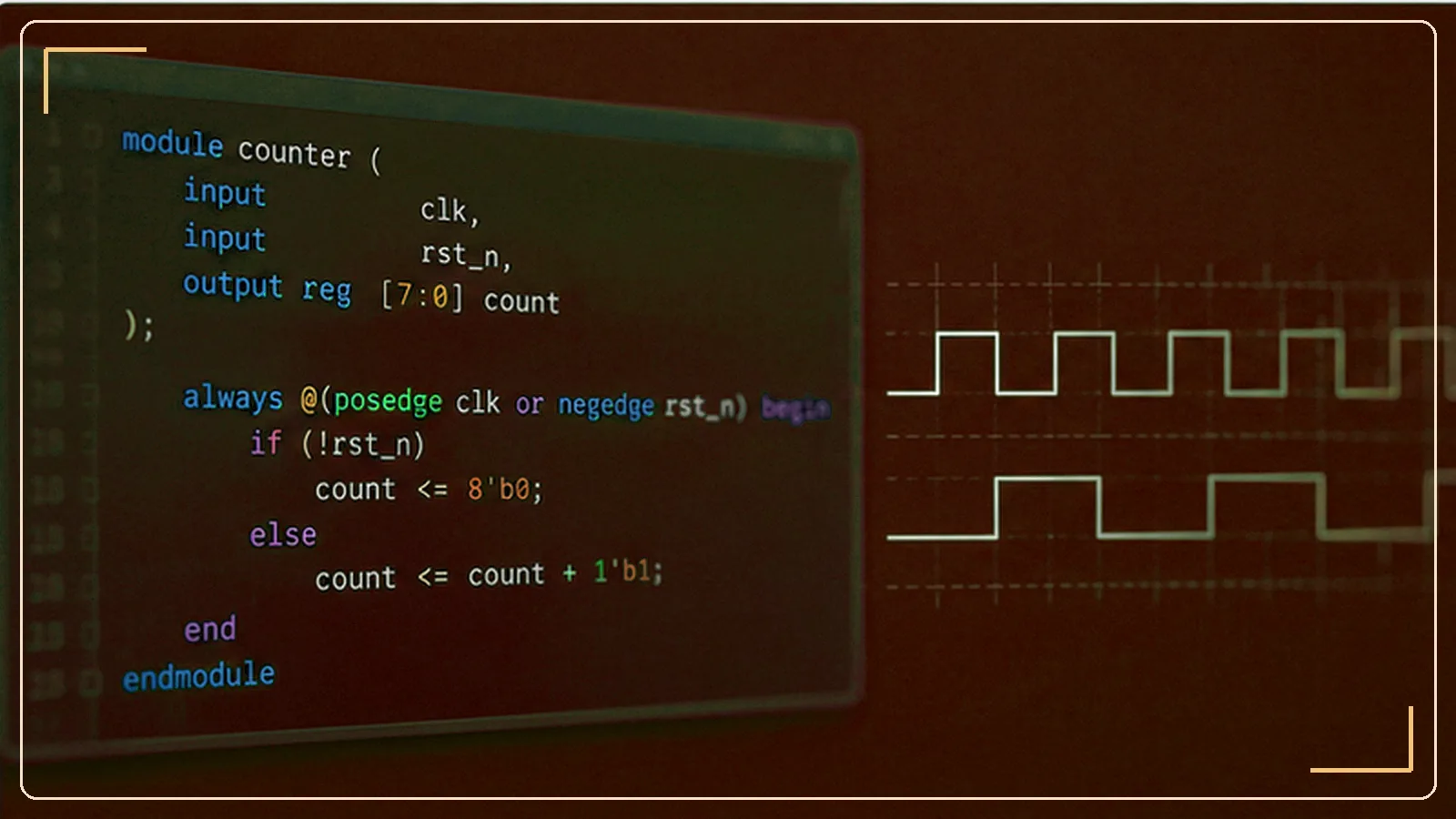
This course is your introduction to Verilog, the essential hardware description language used in digital design. Through a combination of theory and hands-on practice, you'll learn the fundamentals of Verilog coding, including logic gates, data types, and procedural statements. By the end of this course, you'll be able to design, simulate, and implement basic digital circuits using Verilog, setting a strong foundation for advanced digital design projects.
Created by EDA Academy
Last update 08/2026
Level All Level
Language English
5.0
3 ratings
1,419
students

This offering includes

  • 10 modules
  • 46 lectures
  • Access on mobile and computer
  • Certificate of completion
  • 4.06 hours on-demand video
  • 643.6 KB downloadable content
  • 112 Quiz questions

What you'll learn

Explore Fundamental Concepts of Logic Design and Circuit Analysis
Learn Hardware Description Languages and Verilog for Digital System Design
Master Verilog Data Types for Effective Design Representation
Use Verilog Operators for Precise Design Implementation
Describe Design Behavior Using Verilog Procedural Statements
Apply Verilog Assignments in Combinational and Sequential Logic
Understand the Verilog Simulation Cycle
Enhance Code Readability and Reusability with Verilog Subroutines

Who is this course for

Students in Electrical Engineering: Looking to gain practical experience in digital design.
Beginners in Hardware Description Languages: Seeking to learn the basics of Verilog.
Engineers Transitioning to Digital Design: Interested in mastering Verilog to enhance their career.
FPGA Developers: Aiming to refine their Verilog coding skills for FPGA projects.
Designers of Digital Circuits: Interested in formalizing their understanding of Verilog.
VLSI Design Students: Looking to strengthen their foundation in hardware description languages.
Computer Science Majors: Eager to explore the hardware side of computing.
Professionals Working in Embedded Systems: Needing to learn Verilog for project requirements.

Requirements

Familiarity with Boolean algebra, including simplifying logic functions and designing circuits.
Understanding of digital microelectronics, focusing on the design and verification of digital circuits.
Familiarity with hardware design principles, such as creating and analyzing digital circuits.
Familiarity with logic design tools and techniques, for both theoretical and practical applications.

Description

This course is designed to guide you through the essential concepts of Verilog, a powerful hardware description language. Whether you're new to digital design or looking to enhance your skills, this course will provide a solid foundation in Verilog. We’ll explore basic logic gates, learn how to describe hardware using Verilog, and dive into data types, operators, and procedural statements. By the end of this course, you'll be comfortable with Verilog's core features and ready to apply them in your own projects. In this course, "Verilog Coding - Fundamentals," you'll start by learning the basics of logic design, including essential gates like AND, OR, NAND, and NOR. We'll break down how these gates work and how they are used in creating digital circuits. You’ll also learn how to simplify logic functions using Boolean algebra and Karnaugh maps, and how to design circuits using these basic building blocks. The course then moves on to Verilog, a hardware description language widely used for designing digital systems. We’ll cover the core concepts of Verilog, such as data types, operators, and procedural statements. You’ll get hands-on experience with writing Verilog code and understa...

You may also want to learn

Explore more
EDA Academy - Learn From The Best
Average
5.0
Ratings
126
Students
1,741
Offerings
196196 live

Bio

EDA Academy is a practical learning platform for engineers in the VLSI and semiconductor industry. We offer structured courses, technical resources, and career-focused training across all major areas of chip design and verification — from Verilog to Physical Design, from fundamentals to advanced topics. Learn at your own pace, explore member-exclusive content, or join as an instructor to share your expertise. Learn. Grow. Teach.

Instructor recommendations

Explore more
A free account is required to add this offering.