

.png&w=3840&q=75)
Foundations of Analog Circuit Design
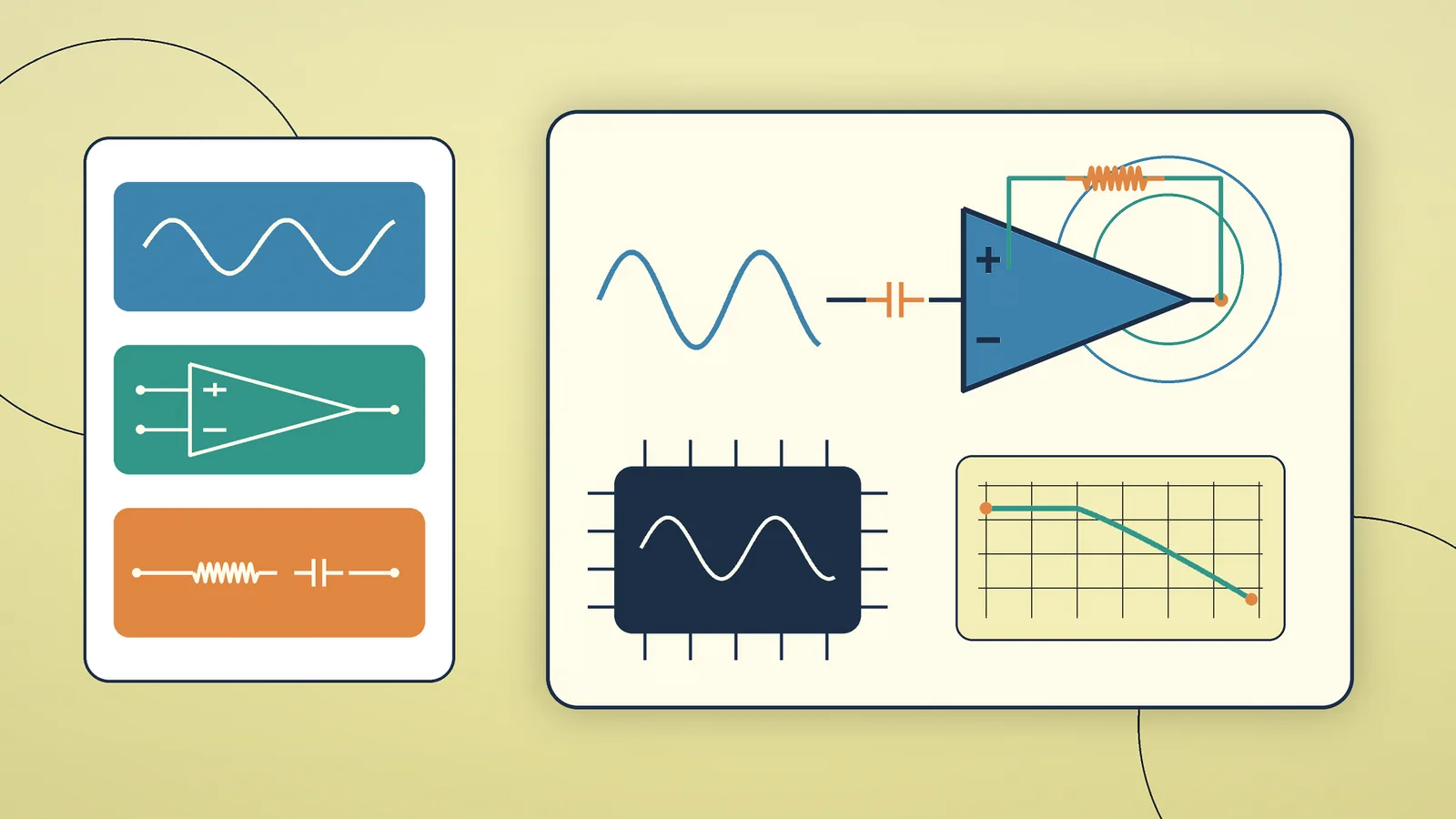
Analog circuit design plays a critical role in bridging the digital world with continuous real-world signals. This domain focuses on the precise handling of voltage, current, and frequency to enable sensing, control, communication, and power management in electronic systems. Emphasis is placed on signal integrity, noise mitigation, and robust performance under physical and environmental variations. Key principles include the distinction between analog and digital signals, abstraction levels in design, and the diverse applications of analog ICs across multiple industries such as instrumentation, data conversion, and control systems.
This resource includes
resourceDescription
Analog design represents one of the most technically intricate areas within integrated circuit development. Operating with continuous signals, analog circuits must manage voltage, current, and frequency variations with exceptional precision. These circuits function as critical intermediaries between the physical environment and digital logic, ensuring that real-world phenomena—such as temperature, light, sound, and pressure—are correctly interpreted and controlled. Each element in the design, from a single transistor to a complex amplifier block, must be crafted with attention to detail to maintain signal fidelity, stability, and low noise across a broad range of conditions. The practical implementation of analog functionality demands a deep understanding of electrical behavior and a methodology centered on component-level interaction. Unlike digital design, which benefits from abstraction through synthesis and standardized flows, analog design requires direct manipulation of electrical characteristics. Designers must consider parasitic effects, temperature drift, device mismatch, and process variability, all while achieving strict performance metrics. Transistor-level schematic...
This resource includes
resourceDescription
Analog design represents one of the most technically intricate areas within integrated circuit development. Operating with continuous signals, analog circuits must manage voltage, current, and frequency variations with exceptional precision. These circuits function as critical intermediaries between the physical environment and digital logic, ensuring that real-world phenomena—such as temperature, light, sound, and pressure—are correctly interpreted and controlled. Each element in the design, from a single transistor to a complex amplifier block, must be crafted with attention to detail to maintain signal fidelity, stability, and low noise across a broad range of conditions. The practical implementation of analog functionality demands a deep understanding of electrical behavior and a methodology centered on component-level interaction. Unlike digital design, which benefits from abstraction through synthesis and standardized flows, analog design requires direct manipulation of electrical characteristics. Designers must consider parasitic effects, temperature drift, device mismatch, and process variability, all while achieving strict performance metrics. Transistor-level schematic...
Recommended

EDA Academy is a practical learning platform for engineers in the VLSI and semiconductor industry. We offer structured courses, technical resources, and career-focused training across all major areas of chip design and verification — from Verilog to Physical Design, from fundamentals to advanced topics. Learn at your own pace, explore member-exclusive content, or join as an instructor to share your expertise. Lear...
